Wellbeing in menopause: your guide to getting back on track in September

At a glance
Getting back into a routine in September feels harder during perimenopause and menopause because fluctuations in estrogen and progesterone reduce the body’s ability to adapt to changes in pace.
Five areas make a difference at this stage: nutrition, physical activity, sleep, mental wellbeing and hormonal balance.
Strength training at least twice a week protects both muscle mass and bone density, the two assets that declining estrogen erodes most quickly.
An eating plan that supports energy and recovery works better than an aggressive calorie deficit, which accelerates muscle loss and raises cortisol.
When symptoms interfere with everyday life, healthy habits need to be accompanied by a medical assessment, including consideration of hormone therapy according to the eligibility criteria in international guidelines.
In September, the diary fills up quickly: the children’s school, work projects left unfinished, appointments postponed over the summer. Yet one thing is almost always missing from this list: personal wellbeing, especially for women going through the menopausal transition.
Perimenopause is the transition phase before the final menstrual period, characterized by irregular cycles and marked hormonal fluctuations, and it can last from a few months to several years. Menopause is diagnosed retrospectively after twelve consecutive months without a period. In both phases, the change of season requires the body to adapt from a less stable hormonal starting point.
This guide is designed to help you get back on track with useful advice on five areas that, according to scientific evidence, make a difference during perimenopause and menopause: nutrition, physical activity, sleep, mental wellbeing and hormonal health. For each one, you will find sustainable habits, and we will look at why a professional assessment may sometimes be necessary.
Why is getting back into a routine in September harder during menopause?
Every change of season brings an invisible adjustment for the body. During perimenopause and menopause, however, estrogen levels that are already fluctuating irregularly add to a less stable hormonal balance. As a result, the effects are felt more intensely: lower energy, lighter sleep and a lower mood, all in the very weeks when everyday life demands the most energy.
In fact, estrogen and progesterone do more than regulate the menstrual cycle: they also influence serotonin and dopamine production, body temperature management and the stress response. When these hormones fluctuate, as happens in perimenopause, the body’s ability to adapt to external changes also decreases. This is one reason why many women notice that seasonal changes, not just the autumn transition, coincide with periods when signs of discomfort or fatigue become more noticeable.
A September reset in menopause: 5 pillars for restoring balance
General advice about returning from vacation almost always focuses on nutrition, movement and sleep, but rarely takes into account a body going through a hormonal transition. A generic post-vacation reset plan risks overlooking specific needs, such as protecting muscle mass, managing nighttime hot flashes or looking after bone health.
During perimenopause and menopause, it is worth working specifically on several areas: nutrition, physical activity, sleep, mental wellbeing and hormonal health. Let’s look at how to address each one with practical habits that are sustainable over time.
1. Nutrition in menopause: no restrictions when you return
The main goal of nutrition during menopause is to protect muscle and bone mass, rather than to lose weight quickly. This is a key point for women who are beginning to notice the so-called menopause belly and an increase in overall weight.
An eating plan that supports energy, recovery and muscle tissue works better than an aggressive calorie deficit. Very restrictive diets at this stage tend to make things worse: they accelerate muscle loss, raise cortisol levels and are associated with greater difficulty maintaining results over time. The redistribution of fat toward the abdominal area, documented by the longitudinal SWAN study, is largely linked to declining estrogen and is addressed more effectively by protecting muscle than by cutting calories.
Good eating habits to maintain during menopause
Let’s look at some simple eating habits that, when maintained consistently, provide practical support for the body during this transition:
-
Favor a Mediterranean-style eating pattern, rich in vegetables, legumes, oily fish, whole grains and extra virgin olive oil;
-
Distribute protein across your main meals to protect muscle mass, which tends to decrease as estrogen declines. International guidance for adults over 50 points toward a protein intake of around 1.0–1.2 g per kg of body weight;
-
Pay attention to calcium intake (the Italian LARN set it at 1200 mg a day for women over 50) and vitamin D, including through food;
-
Reduce simple sugars and alcohol;
-
Maintain good hydration;
-
Set aside time each week for meal preparation, because planning ahead reduces decision fatigue and makes it easier to maintain balanced habits.
These are not rigid rules to follow to the letter, but general guidelines to adapt to your tastes, your habits and the signals your body is sending right now.
Turning these guidelines into a real weekly menu that takes account of your preferences, working hours and perhaps other health conditions is not always easy to do on your own.
If you feel that general information is no longer enough, you can speak with a Pausetiv nutritionist specializing in menopause, with whom you can build a personalized nutrition plan.
2. Physical activity: getting back to exercise during menopause
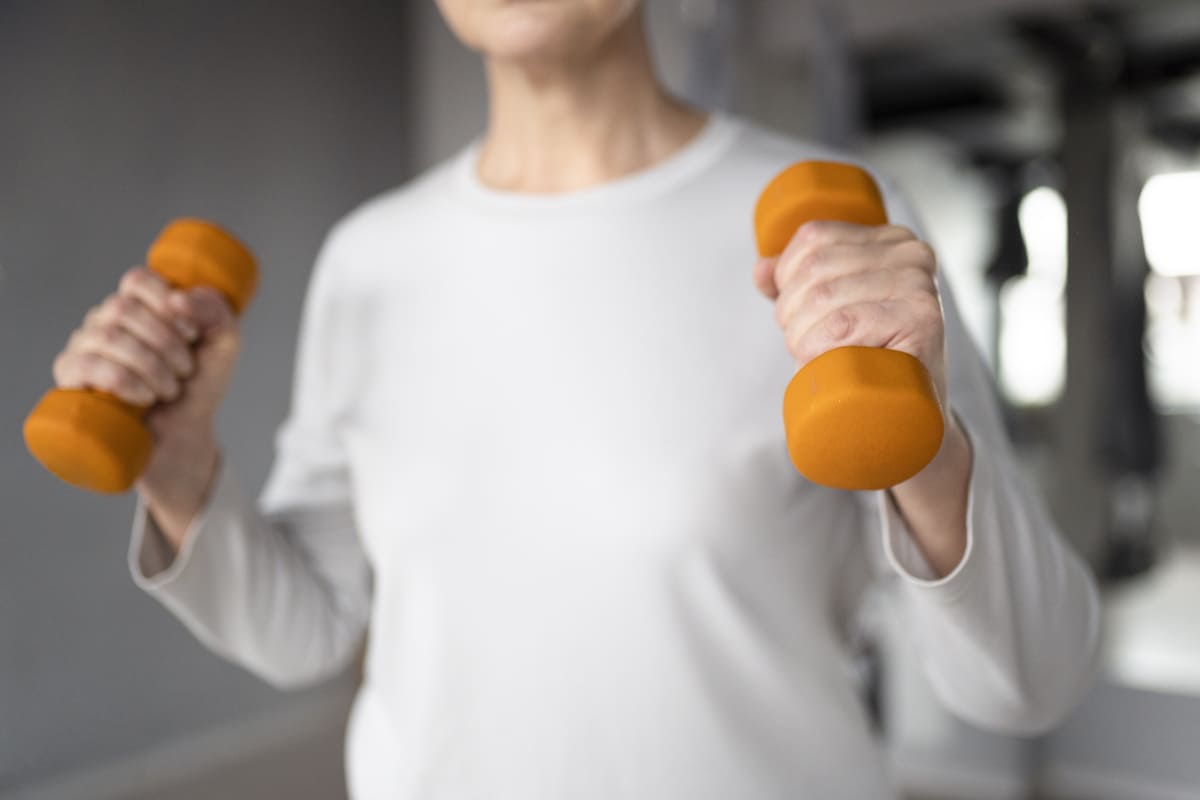
The second area to restart is physical activity, often the first thing set aside during the summer, when the heat discourages exercise and vacations change the routine. The body, however, does not wait for the perfect gym or an intense workout to get moving again. The primary goal of exercise during menopause should be to keep the body strong and the muscles trained.
The WHO recommendations for adults call for at least 150 minutes a week of moderate-intensity aerobic activity and at least two weekly sessions of muscle strengthening involving the major muscle groups. Starting again with two or three workouts a week that alternate strength, aerobic activity and mobility helps the body regain a rhythm without overloading it.
The key is to focus on strength, because as estrogen declines, muscle loss accelerates, and exercise with weights or body weight remains one of the most effective tools for counteracting it. There is no need to lift heavy weights right from the start. Two weekly sessions, even short ones, involving the major muscle groups are enough to protect both muscles and bone density, also reducing the risk of fractures over time.
Alongside strength training, it is helpful to include aerobic activity in your exercise routine. It matters for cardiovascular health and has a direct effect on mood, partly because it promotes the release of endorphins. Finally, mind-body exercises, such as yoga, pilates or stretching, help manage stress and sleep quality, two aspects that are often more fragile during perimenopause.
To learn more, read our guide: Exercise during menopause
3. Sleep: restoring a rhythm after the summer
It is easy to change habits during the summer: going to bed later, waking at different times and following less regular daily rhythms. With the return to routine in September, however, alarms, commitments and stricter schedules come back, and finding a sleep routine again can take a little time. If sleeping well has already become more complicated because of the menopausal transition, with frequent awakenings, hot flashes and night sweats, the return to routine can therefore feel even harder.
In general, sleep changes significantly during perimenopause, mainly because declining estrogen and progesterone alter the body’s temperature regulation, encouraging hot flashes and night sweats that interrupt the deepest stages of sleep. Progesterone, in particular, has a natural calming effect, and when it decreases, the feeling of anxiety also increases, making it harder to fall asleep. An increase in cortisol can add to this, making sleep lighter and more fragmented even on seemingly quiet nights.
Practical tips for improving sleep
There is no single specific technique that works for everyone to restore sleep during menopause, but some habits can help re-establish a regular rhythm during this transition:
-
Keep consistent sleeping and waking times, even on weekends, to help the biological clock recalibrate;
-
Get natural light early in the day to help regulate the sleep-wake rhythm and encourage the natural increase in melatonin in the evening;
-
Reduce exposure to screens, caffeine and alcohol in the evening;
-
Keep the bedroom cool and well ventilated to limit the impact of nighttime hot flashes.
In our article on Sleep and Perimenopause, you will find a closer look at the causes of disrupted sleep during menopause and the most common remedies.
4. Mental wellbeing: small steps to start again without guilt
The fourth area, often the most underestimated, is mental wellbeing. It is often assumed that a vacation alone is enough to recharge the mind, but between unexpected events, constant socializing and thoughts of returning to routine, the mental space we really need is often missing even during this period.
Wellbeing in menopause is not just about a body that exercises or eats better. It is also about a mind that becomes loaded with deadlines again in September, while hormones already influence mood and stress management. Putting yourself back at the center, in this context, also means accepting that you do not have to do everything all at once.
You do not need major changes to lighten the mental load at this time. Five minutes of mindful breathing in the morning, a walk outdoors instead of a break on your phone, a few lines written in the evening to unload the day’s thoughts. Among nonhormonal interventions, the Menopause Society’s 2023 position statement identifies cognitive behavioral therapy (CBT) and clinical hypnosis as the options with the strongest evidence for managing vasomotor symptoms and the emotional impact that accompanies them.
Connections with other people matter too: talking openly about this stage with someone who is experiencing it or has already been through it reduces the sense of isolation that many women describe.
If the emotional load at this time feels harder to manage on your own, or if anxiety, irritability and mood swings interfere with daily life, speaking with our counselor specializing in menopause can help you set aside a dedicated space to process the changes of this stage, without having to face them in silence.
5. Hormonal balance: when habits are not enough
Finally, hormonal balance is the fifth area, and the one that distinguishes a generic restart from a pathway built around the stage you are going through. Nutrition, movement, sleep and stress management act on perimenopause symptoms, but they do not address the cause that generates them: the change in the hormonal environment.
When hot flashes, insomnia, vaginal dryness, joint pain or changes in mood interfere with everyday life, a medical assessment becomes the next step.
Guidelines from the International Menopause Society (IMS) and the European Menopause and Andropause Society (EMAS) identify hormone replacement therapy as the most effective treatment for vasomotor symptoms in eligible women, with a favorable benefit-risk profile when started within ten years of menopause or before age 60. Eligibility is established through a structured clinical assessment, which includes personal and family history, screening for cardiovascular and thrombotic risk, assessment of cancer risk and attention to bone health. This is why hormone therapy requires an individualized medical prescription and ongoing monitoring.
Alongside hormone therapy, there are nonhormonal options for women who have contraindications or choose a different approach. Here too, the decision should be made with a doctor who understands the specific features of this stage.
Wellbeing in menopause: when personalized support might help
Nutrition, movement, sleep, mental wellbeing and hormonal balance are five good starting points for September. But putting your habits back in order is not always enough to feel better straight away.
Perimenopause and menopause can, in fact, present very differently from one woman to another: some mainly experience fatigue and sleep difficulties, some notice changes in weight or mood, and some live with several symptoms at the same time. This is why looking after your wellbeing in menopause also means understanding your priorities at that particular moment.
Although good everyday habits remain fundamental, in some cases it can be helpful to combine them with a discussion with a professional. Depending on your needs, support may address different areas, from gynecology to nutrition and psychological wellbeing. The aim is to understand more clearly what is changing and choose approaches that fit your situation, without relying on generic solutions that do not take the individual into account.
If you are not sure which area needs more attention, our PauseTest can be a first step toward taking stock. The test considers different dimensions of wellbeing and helps identify those that may deserve greater attention right now. From there, it becomes easier to understand whether working on everyday habits could help or whether to explore some aspects further with a specialist.
Disclaimer: the information in this article is intended solely for informational and educational purposes. It does not in any way replace the advice, diagnosis or guidance of a doctor or healthcare professional. If you have questions or symptoms that concern you, always consult a qualified specialist. The PauseTest is a tool for initial assessment and awareness: it is not diagnostic and is not a medical device under EU Regulation 2017/745.
Frequently asked questions
Is it normal to feel more tired or “flat” in September during menopause?
Yes, and it is a real condition, not just a perception. It does not mean something is wrong: it is a temporary adjustment that tends to ease within a few weeks, especially if you address sleep, movement and nutrition together, without expecting to feel your best from day one.
How long does post-vacation fatigue last during menopause?
In most cases, the adjustment is complete within two to four weeks. Fatigue that persists beyond this period, especially if accompanied by insomnia, low mood or difficulty concentrating, warrants a discussion with a doctor to rule out other causes, such as anemia, thyroid changes or vitamin D deficiency.
Does the change of season affect menopause at other times of the year too?
Yes, it is not limited to September. Any seasonal transition that significantly changes light exposure, such as the beginning of winter or the clock change, requires a similar adjustment in melatonin and cortisol. During perimenopause and menopause, when these balances are already less stable, the effects tend to be felt at every change of season, not just when returning from summer vacations. This is why the habits built now remain useful in the months ahead.
Which exercises should you choose during menopause?
The most effective combination brings together strength training to counteract muscle and bone loss, aerobic activity with high-intensity intervals for the heart and mood, and mobility exercises such as yoga or pilates for stress and sleep. Two or three weekly sessions, chosen according to your starting level, are more sustainable than an intense program concentrated into a few weeks.