
Insomnia in menopause and perimenopause: causes, symptoms and remedies
Updated on Jul 30, 2026
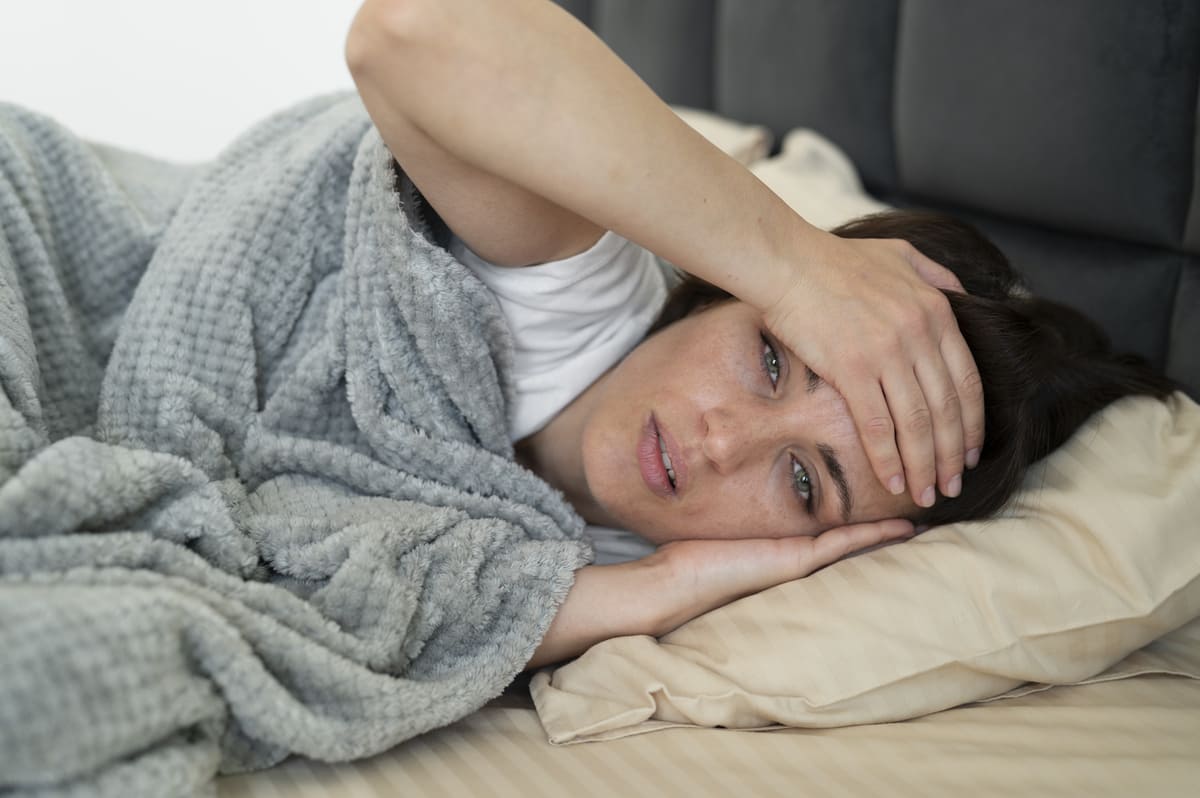
You toss and turn in bed once again, look at the time and wonder why sleep, which used to come without a second thought, now seems so difficult to find.
You are not alone. According to the British Menopause Society Tool for Clinicians (2025), between 40% and 56% of women going through the menopausal transition report difficulty sleeping, making insomnia one of the most common, and most underestimated, signs of this phase. It can appear as early as perimenopause, often before other more recognizable changes.
In this article, we look at why sleep changes during the menopausal transition, which common sleep disturbances can appear, how long they may last and what you can do to get back to more regular nights.
Menopause and insomnia: what changes at the hormonal level?
During the menopausal transition, estrogen and progesterone levels fluctuate irregularly. This is especially true during perimenopause, when fluctuations are more unpredictable. These hormones regulate the sleep center in the brain and body temperature. When they decline, thermoregulation changes and hot flashes and night sweats can interrupt rest.
Progesterone also has a calming and relaxing effect, but its decline can reduce sleep quality and increase evening anxiety. There is also a lesser-known effect: estrogen and progesterone help maintain muscle tone in the upper airways, so their decline can affect not only falling asleep but also nighttime breathing.
The reduction in melatonin and increase in cortisol, the stress hormone, complete the picture, making sleep lighter and more fragmented. Difficult nights during this phase are therefore not caused by a single factor, but by the interplay of several changes the body is going through at the same time.
Sleep in menopause: the 6 most common disturbances
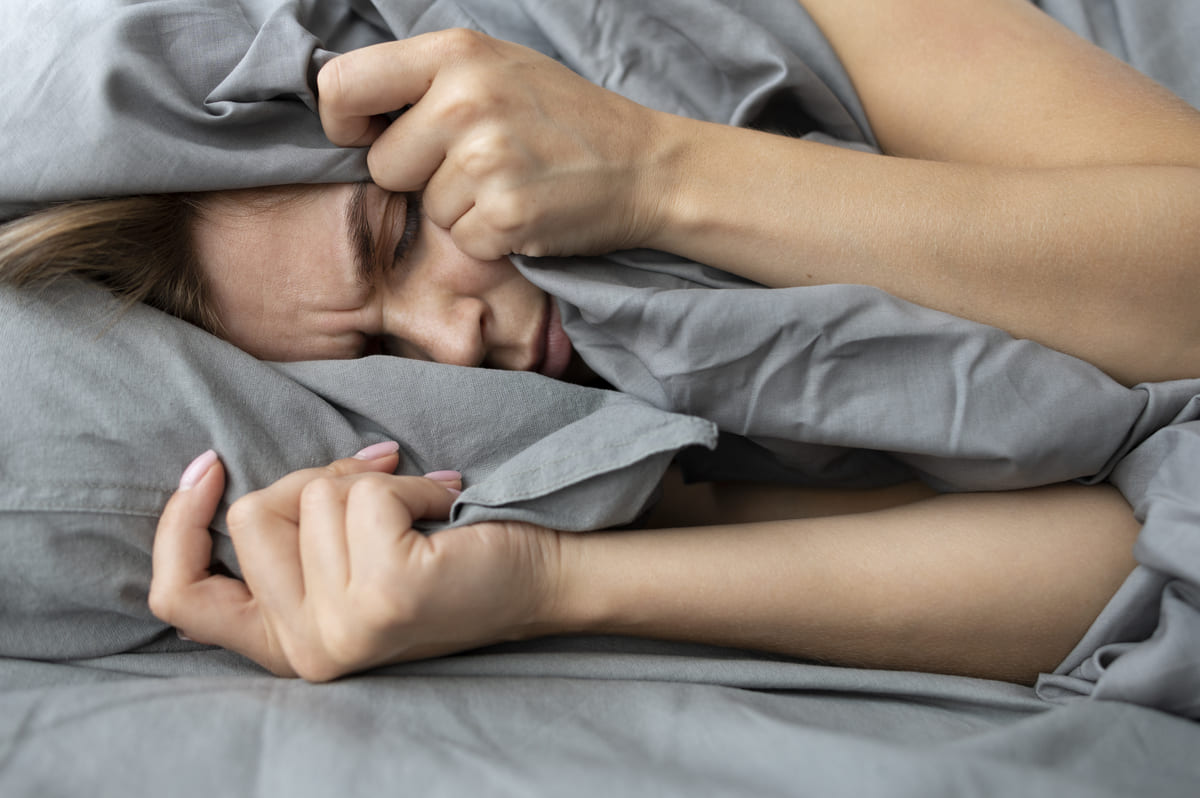
We have seen that hormonal changes can cause sleep disturbances. Now let us take a closer look at what these disturbances are and how to recognize them, even when you are not sure they may be connected to perimenopause.
The main sleep disturbances during menopause include:
-
Sleep-maintenance insomnia: this means frequent nighttime awakenings. You wake up one or more times during the night, often without an apparent cause, and struggle to fall back asleep. Hot flashes and night sweats are among the most common reasons for these awakenings, but sleep can also be interrupted on its own, without any recognizable physical symptom.
-
Difficulty falling asleep: an active mind and recurring thoughts. You go to bed tired, but your mind does not switch off. Thoughts overlap, the day’s worries resurface and a feeling of alertness leaves no room for relaxation. This disturbance is often linked to the decline in progesterone, which normally has a calming effect, and to higher-than-usual evening cortisol levels.
-
Unrefreshing sleep: you wake up tired despite 8 hours of sleep. The number of hours spent in bed does not match the hours of actual rest. You may sleep through the entire night and still wake up feeling as though you have not rested at all. This happens when sleep loses depth, remaining lighter and more fragmented even without awakenings you are aware of, and it affects your clarity and energy the following day.
-
Restless legs syndrome: discomfort and involuntary movements. A sensation of tingling, tension or discomfort in the legs that is especially noticeable when you are still, in the evening or at night, and makes you move them to find relief. It can delay falling asleep or cause awakenings, and in some women it appears or becomes more intense during the menopausal transition.
-
Obstructive sleep apnea: it can appear or worsen with age and hormonal decline. It involves brief but repeated pauses in breathing during sleep. It is one of the least recognized disturbances during this phase.
-
Daytime sleepiness during menopause: tiredness and drops in energy while awake. It is often the direct consequence of a fragmented night rather than a disturbance in its own right: when deep sleep decreases, the body does not recover enough and tiredness carries over into the following hours as reduced concentration, a need for caffeine or the desire to rest in the afternoon.
In addition to these 6 sleep disturbances during menopause, many women have reported a tendency to snore and experience nighttime cramps. Let us take a closer look at these two additional signs.
Why do women snore during menopause? What the studies say
Snoring is not always a direct consequence of menopause, but the changes that occur during this phase can create the conditions for the upper airways to narrow more easily during sleep, also increasing the likelihood of nighttime apnea as we have seen.
When air struggles to pass through the throat, the soft tissues vibrate, producing the typical sound of snoring. As estrogen and progesterone decline, the muscles that normally keep the airways open can weaken. Advancing age also contributes, making the tissues of the airways more prone to discomfort during sleep.
Several studies confirm this multifactorial picture. Research conducted on European women found that lower estrogen and progesterone levels are associated with a greater likelihood of snoring and experiencing nighttime respiratory symptoms.
Nighttime cramps during menopause: what causes them?
As for nighttime leg cramps, the sudden, painful contractions that sometimes interrupt sleep, they are often linked to the hormonal changes of this phase, but rarely have a single cause. The most commonly cited factors include variations in the balance of magnesium, potassium and calcium, minerals involved in muscle contraction and relaxation, as well as possible dehydration in the evening or long hours spent in the same position during the day.
If cramps are occasional, small changes to hydration and evening stretching are often enough. When they become frequent or particularly intense, a conversation with a specialist can help identify whether there are other factors to consider.
Menopause and insomnia: what are the effects?
Insufficient sleep affects not only energy, but the entire body. Sleeping only a few hours a night for prolonged periods may be accompanied by changes in weight, increased insulin resistance and daytime irritability.
Some studies also indicate that when insomnia during menopause is not addressed, it may be associated over time with greater difficulty concentrating and remembering, as well as a sense of tiredness that continues throughout the day. By reducing the efficiency with which the body converts energy, the decline in estrogen and progesterone contributes to this feeling of persistent fatigue even when the hours of sleep seem sufficient, an aspect we explored in our article on fatigue during menopause.
Furthermore, according to the Harvard Women’s Health Study (2022), women with chronic insomnia during perimenopause are twice as likely to develop depressive symptoms as those who sleep regularly. Recognizing these signs early, without dismissing them as “just tiredness” or “just stress”, helps you avoid ignoring them and seek concrete support straight away.
How long does insomnia during menopause last?
There is no answer that applies to everyone, because the duration depends on how each woman experiences the menopausal transition. In general, sleep disturbances tend to appear as early as perimenopause, when hormonal fluctuations are more pronounced, and may continue throughout menopause itself.
In most cases, the greatest intensity is concentrated in the years immediately before and after the last menstrual period, when the decline in estrogen and progesterone is more pronounced. Over time, once the body settles into its new hormonal balance, sleep tends to improve gradually for many women, although some disturbances, such as nighttime awakenings or snoring, may persist for longer in some cases. Observing how they evolve over time, perhaps by keeping track of the most difficult nights, can help you understand whether it is a temporary disturbance or whether a conversation with a specialist may be useful.
Remedies for insomnia during menopause: what can you do?
So far, we have looked at how sleep changes during perimenopause and menopause, which disturbances can appear and what effects they can have on the rest of the day when they are not addressed. The good news is that even though hormonal decline lies behind many of these changes, this does not mean there is nothing you can do.
There is no single strategy that works for everyone, because sleep during this phase is affected by several factors at once: hormonal and environmental factors, lifestyle and, in some cases, the need for specialist support. This is why the most effective approach works on several fronts at the same time, starting with small daily steps that can make a tangible difference in restoring sleep.
Here are some remedies that may help improve sleep during menopause:
-
Restore your circadian rhythm: going to bed and waking up at the same time helps the body rebalance melatonin production. Avoiding screens and blue light during the two hours before sleep encourages mental relaxation.
-
Control temperature and environment: the ideal bedroom temperature for sleep is between 18 and 20°C. Natural fabrics and breathable clothing reduce the effects of hot flashes. A fan or cooling pillow can help you rest better.
-
Targeted nutrition and supplementation: avoid caffeine, alcohol and sugar in the evening. Foods rich in magnesium, vitamin B6 and tryptophan, such as legumes, whole grains and nuts, support the natural production of serotonin and melatonin and may also help reduce the frequency of nighttime cramps.
-
Hormone therapy or non-hormonal support: international guidelines on menopause and sleep, including those of EMAS (European Menopause and Andropause Society), indicate that hormone therapy can improve sleep by reducing hot flashes and anxiety. Alternatively, meditation and relaxation techniques have shown benefits. Remember that the most suitable therapy should always be evaluated with a specialist endocrinologist or gynecologist.
-
Stress management: breathing practices, yoga and meditation lower evening cortisol and encourage relaxation. Studies in Frontiers in Psychology (2024) show that eight weeks of mindfulness improve sleep quality in women during perimenopause.
What can you take for insomnia during menopause?
After looking at some of the most common remedies for managing sleep changes during menopause, many women may wonder whether there is a single solution, almost a “medicine”, that directly helps insomnia during menopause. In reality, it is not that simple because there is no choice that works for everyone: every situation needs to be assessed carefully and there is no specific treatment that is suitable for every woman without distinction.
For this reason, we cannot directly advise you what to take. As we have mentioned, the causes of insomnia during this phase can vary, and the most appropriate answer depends on exactly what is happening. The right choice is to share a complete picture of your symptoms with a specialist, so that together you can identify the most suitable path.
Menopause and insomnia: when should you speak to a specialist?
If insomnia lasts for more than a month, affects your mood or concentration, or is accompanied by intense physical symptoms, such as pronounced snoring, pauses in breathing at night or very frequent cramps, it may be helpful to talk to a doctor experienced in women’s health, who can help you understand what is happening among hormonal and metabolic changes or breathing-related factors.
At Pausetiv we consider sleep a key indicator of hormonal balance.
Through the PauseTest, you can assess this aspect alongside the other signals from your body, gaining a more complete picture from which to find the most appropriate support.
Recognizing the body’s signals and acting with awareness is the way to regain serenity and clarity. Sleeping well is not a luxury, but a form of self-care.
Disclaimer: the information contained in this article is intended solely for informational and educational purposes. It does not replace in any way the advice, diagnosis or guidance of a doctor or health professional. If you have doubts or symptoms that concern you, always consult a qualified specialist.
Frequently asked questions about sleep and menopause
- Are there effective natural remedies for insomnia during menopause?
There is no natural remedy that works for every woman, because the causes of insomnia during this phase can differ. They may be hormonal or related to stress or breathing, and each requires a specific approach. For this reason, we cannot recommend a particular product or supplement: the safest choice is to share your situation with a doctor experienced in women’s health, who can guide you toward the solution most suitable for your case.
- What should you do if insomnia during menopause does not improve despite good habits?
If you have already tried adjusting your sleep-wake rhythm, bedroom temperature, evening diet and stress management without seeing an improvement, it does not mean you are doing something wrong. It is instead a sign that during this phase of the menopausal transition, insomnia may depend on factors that daily habits alone cannot resolve. At that point, a more in-depth conversation with a specialist may be useful to understand whether there are other factors to monitor that are difficult to identify and address on your own.
- What should you do if insomnia during menopause lasts for weeks?
When insomnia continues for several weeks, the first useful step is to observe how it appears: if it occurs together with hot flashes, night sweats or mood swings, it is likely to be linked to the hormonal changes of this phase, and it is therefore useful to talk to a doctor. In the meantime, keeping regular sleep times, a cool environment and few evening distractions remains the foundation while you wait for a more targeted conversation with a specialist.
- Is it normal to feel sleepy during the day in menopause?
Yes, it is a very common effect: when nighttime sleep is fragmented by hot flashes, awakenings or disturbed breathing, the body does not recover enough and tiredness spills over into the daytime. It should be discussed with a specialist if sleepiness is pronounced, persistent or interferes with daily activities, because in some cases it may also indicate a sleep-related breathing disorder that needs to be assessed.