Menopause supplements: which ones actually work, what for and how to choose
Updated on Nov 11, 2026
In short
- There is no single best supplement for menopause: how well any supplement works depends on the goal, on any deficiencies documented by blood tests and on each woman's medical history.
- Vitamin D has the strongest evidence for bone health after menopause.
- Creatine is one of the most studied supplements for supporting muscle mass and strength, which decline more quickly after menopause.
- Every supplement should be tried for a set period, usually 8–12 weeks, at a stated dose and after talking to a specialist, especially if you take other medicines.
If you are searching for ‘menopause supplements’ or ‘perimenopause supplements’, you are most likely not looking for just any product. You are looking for clarity.
Your body is changing, often in a far from linear way, and in this context supplements become a frequent choice, because they seem to answer real needs. The point is not whether menopause supplements actually work, but that the market is mixed: alongside products with a solid scientific rationale, there are formulations built more on promises than on evidence. To find your way, you need to tell apart ingredients, doses and real goals.
This guide is here to help you find clarity, without adding to the confusion you already find on the shelves and online. We have gathered the main supplements used in perimenopause and menopause and, for each one, we tell you what the studies say, what they do not yet say, which dose makes sense and when it is better to stop and talk it over with a specialist. The aim is to give you the tools to choose, with awareness, what you truly need, and to leave aside what you do not.
Menopause supplements: what should you ask yourself before choosing one?
Behind the label “menopause supplement” there are products that are very different from one another. First of all, it is worth making clear that a supplement is not a medicine, but it can help fill gaps or give targeted support. In menopause it can make sense in two specific situations: when blood tests show a deficiency that needs correcting, as often happens with vitamin D, or when there is a specific goal, such as supporting muscle mass alongside strength training.
Working out whether a supplement is right for you is an assessment that a specialist needs to make, someone who knows your medical history, your test results and any medicines you take. Some questions, however, can help you look more critically at what you find on the shelves and bring the right doubts to that conversation.
The 5 questions to ask yourself when looking at a supplement are:
- What specific goal do I want to achieve?: not ‘generally feeling better in menopause’ but, for example, improving bone health, supporting muscle mass or reducing night-time waking. The answer changes everything.
- Is the ingredient clear and standardized?: be wary of ‘proprietary blends’ without stated doses. If you do not know the amount, you cannot compare it with the studies.
- Does the dose make sense?: many products contain ‘a bit of everything’ in doses too low to have measurable effects (or too high for some active ingredients).
- Is there evidence for that specific use?: an ingredient may have evidence for one goal and none for another. Marketing promises often ‘stretch’ what the research really suggests.
- How will I judge whether it works?: set a time frame (8–12 weeks) and a criterion. If nothing changes, stopping is a smart choice, not a defeat.
The best supplements for menopause: do they really exist?
Before looking in more detail at the types of supplements most used in menopause and perimenopause, it is important to answer a question many women ask themselves: whether some supplements really are better than others for menopause.
Our answer is: no.
Anyone promising “the best supplement for menopause” is simplifying a much more complex reality. A supplement can be useful for one woman and completely unnecessary for another, because its effectiveness depends mainly on three factors that vary from person to person: the goal you want to reach, whether there is a documented deficiency, and your overall clinical picture, including any medicines you already take.
The stage of the menopausal transition you are going through also matters. For example, in perimenopause, with fluctuating hormones, priorities can be different from those in the years after your last period.
To understand which supplements to take in menopause, the right question is not which one is the most effective overall, but which one makes sense for you, right now.
Answering this question requires a personalized assessment with a specialist who knows this stage of life, who can read symptoms, test results and medical history, and who can tell what can be left to a supplement from what deserves a different approach.
If you are looking for specialist support, book a free orientation call with Pausetiv
Supplements or hormone replacement therapy (HRT): why do many women choose supplements?
When menopause symptoms start to make themselves felt, there are several possible paths. On one side there are supplements, easy to find and seen as a light solution; on the other there is hormone replacement therapy (HRT), which makes up for falling estrogen and is the treatment with the strongest evidence for many symptoms of this stage. And yet, in most cases, the first choice is supplements.
There is a specific historical and cultural reason for this: for years, hormone replacement therapy was seen as dangerous.
This perception comes from how the American WHI study (Women’s Health Initiative, 2002) was communicated. It reported an increase in some risks, particularly breast cancer and cardiovascular events, in a specific group of participants. The impact was immediate: millions of women stopped therapy, and HRT use fell by 50–70% within a few months.
In the following years, however, a more in-depth analysis of the data clarified a decisive point: WHI participants were on average 63 years old, well beyond the typical age for starting therapy. The risk-benefit profile changes significantly in younger women close to menopause.
The main international scientific societies, including the International Menopause Society (IMS) in its 2024 White Paper, make clear that in healthy women under 60 or within about 10 years of their last period, hormone therapy, when indicated and correctly prescribed, is the most effective treatment for vasomotor symptoms (hot flashes and night sweats) and plays an important role in protecting against bone loss.
In Italy, the data confirm women’s tendency to prefer supplements. According to the Study on food consumption in Italy (IV SCAI), carried out by CREA, which analyzed the consumption habits of the Italian population, supplements are used by 10% of women aged 18 to 64, compared with about 5% of men in the same age group. Among women aged 65 to 74, the figure rises to 16%, compared with 6% of men.
Supplements in menopause: an overview
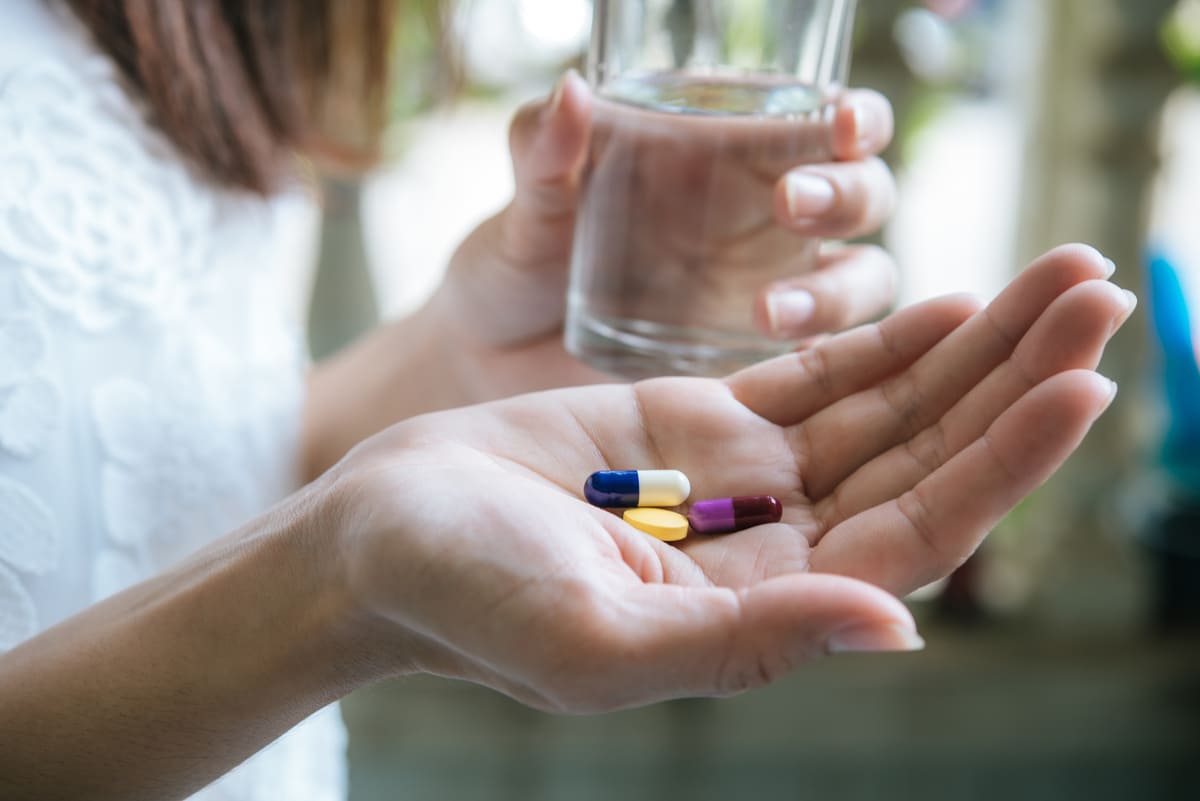
Vitamin D, magnesium, creatine, omega 3, collagen, phytestrogens and probiotics are the most widely used supplements among women in perimenopause and menopause. Each one answers a different need, and none is right for everyone: that is why, before going into detail, it can help to have an overall map. The table sums up, for each one, the need it may address and the situations in which it is particularly important to talk to a specialist before starting.
| Supplement | When it may be useful |
|---|---|
| Vitamin D | To support bone health, especially if blood tests show a deficiency |
| Magnesium | For muscle tension, cramps and quality of recovery, when intake is low |
| Creatine | To support muscle mass and strength, alongside strength training |
| Omega 3 (EPA and DHA) | For high triglycerides and cardiometabolic health, if you eat little fish |
| Collagen | For skin and joints, with realistic expectations |
| Phytestrogens | Studied for hot flashes, but with uncertain results and not recommended by some major guidelines |
| Probiotics | For gut balance and the vaginal microbiota, choosing the right strain |
In the sections that follow we look at each supplement in depth: what it is for, what the studies say, which doses are used, which precautions to consider and when it is better to talk to a specialist.
Vitamin D in menopause: a priority for your bones
Vitamin D is a prohormone that regulates the absorption of calcium from the gut and keeps the balance between calcium, phosphorus and parathyroid hormone, the three pillars of bone health.
After menopause, falling estrogen speeds up bone remodeling: bone loss can accelerate after menopause. This does not mean that everyone will develop osteoporosis, but it does mean that protecting your bones becomes a real priority, because fractures, loss of independence and chronic pain are not distant events, but risks you can act on today.
What vitamin D actually does in menopause:
- it improves the absorption of calcium from the gut;
- it reduces secondary hyperparathyroidism caused by deficiency (the mechanism by which the body ‘takes’ calcium from the bones to compensate);
- it supports muscle function, indirectly reducing the risk of falls.
Symptoms of vitamin D deficiency in menopause
Vitamin D deficiency is often silent and for a long time may give no obvious signs, which is why the first tool for spotting it is a blood test, not watching for symptoms. When the deficiency is marked and prolonged, the most common signs are:
- widespread bone pain, especially in the back, pelvis and legs;
- muscle weakness and difficulty climbing stairs or getting up from a chair;
- cramps and muscle fatigue;
- persistent tiredness and low energy.
In menopause these signs are easy to confuse with other changes typical of this stage, such as joint pain or fatigue. Some conditions make a deficiency more likely: little sun exposure, dark skin, being overweight, intestinal absorption disorders and certain medicines. In these cases, asking your doctor to measure your vitamin D is a sensible choice.
Vitamin D dosage in menopause
EMAS (European Menopause and Andropause Society), in its Position Statement 2023 on vitamin D and menopausal health, makes clear that supplementation should be decided on clinical grounds.
According to the same guidance, deficiency is defined as below 20 ng/mL and severe deficiency as below 10 ng/mL. When there is a deficiency or a bone-related indication, the specialist sets the dose and duration; 800–2,000 IU/day is a range used in some recommendations, not a routine dose for everyone. The optimal dose should always be tailored to your blood test results and your doctor’s advice. Very low levels (< 20 ng/mL) call for different correction schedules from those used for women who are already within range.
Magnesium in menopause: what is it worth taking for?
Magnesium is an essential mineral involved in more than 300 biochemical reactions: muscle contraction and relaxation, transmission of nerve impulses, energy production. It is a structural element of how cells work.
Three things happen at this stage that make magnesium more relevant: greater vulnerability to stress (which increases magnesium excretion), sleep changes, and hormonal changes that affect the autonomic nervous system.
Some women choose it when they recognize themselves in these pictures:
- persistent muscle tension, night cramps;
- a feeling of being ‘on edge’, difficulty relaxing in the evening;
- neuromuscular fatigue, light and broken sleep.
Magnesium is neither a sedative nor an anti-anxiety medicine. Its effect is more subtle: it can help make the neuromuscular system less ‘tense’, especially during long periods of stress. If there is a deficiency or the system is under pressure, it can improve the quality of muscle recovery and the feeling of physical tension.
If, on the other hand, the main symptoms are linked to marked hormonal changes, insomnia from night-time hot flashes or established anxiety, magnesium alone is not enough, and tackling the cause is more effective. In these cases it may help to read our in-depth article on insomnia in menopause.
Magnesium: the benefits for women in menopause
The benefits of magnesium recognized at European level by the EFSA, the European Food Safety Authority, concern concrete functions: magnesium contributes to normal muscle function, to the normal functioning of the nervous system, to the maintenance of bones and to the reduction of tiredness and fatigue. These benefits apply when intake is adequate and are seen mainly in people who start from a low level.
For sleep and mood the evidence is weaker: some studies report improvements, especially in older adults or those with low intake, but the results are not consistent.
Which magnesium should you take in menopause?
The form matters: magnesium citrate and bisglycinate are generally better tolerated by the gut than oxide, and may have a profile better suited to neuromuscular support. Magnesium oxide (the cheapest and most common) has low bioavailability.
When choosing, more than the promise on the label, what matters is reading the amount of magnesium per dose, meaning the magnesium actually present and not the weight of the salt that contains it. A product with a single ingredient and a clear dose lets you understand whether the supplement is working, something impossible with blends that combine many different substances.
Creatine in menopause: strength, muscles and benefits for the brain
As we have already mentioned, from the age of 40 there is a gradual loss of muscle mass that speeds up after menopause as a result of falling estrogen.
Creatine is often thought of as a supplement just for athletes, but it is an energy molecule produced naturally by the body and found in meat and fish, involved in regenerating ATP, the energy currency of muscles and brain. The body produces about one gram a day and stores almost all of it in the muscles, as phosphocreatine, a reserve used up mainly during short, intense efforts, such as lifting a weight or running up the stairs.
Creatine, combined with strength training, is one of the few supplements with solid evidence for:
- improving work capacity during training;
- supporting gains in lean mass;
- reducing muscle recovery time;
- enhancing adaptation to resistance training.
The key point is precisely the combination: without regular strength training, creatine alone has very limited effects on muscle mass. Who it makes most sense for: women who do (or want to start) strength training, women who notice a drop in performance and recovery, women who want to invest in their body and how it functions.
Typical doses in studies: 3–5 g/day for maintenance, with no need for a loading phase in women.
And the brain? Creatine is taken with solid results for muscle and performance, but a line of research on brain energy and cognition is also emerging, relevant for women in menopause who often report ‘brain fog’. It is not yet in the guidelines, but it is worth keeping an eye on. If brain fog is one of the symptoms you feel most, it is worth discussing with a specialist whether this supplement might be an option for you.
Creatine in menopause: contraindications
In healthy people, creatine monohydrate at the doses used in studies is considered safe, even over long periods. There are, however, a few things to know before starting:
- in the first few weeks there may be slight weight gain, linked to water held in the muscles and not to an increase in fat;
- at high doses or taken on an empty stomach it can cause gut discomfort, which usually eases by splitting the dose or taking it with meals;
- it raises blood creatinine, a value used to assess kidney function: tell your doctor before having blood tests, to avoid misleading readings;
- in case of kidney disease, diabetes affecting the kidneys or medicines that act on the kidneys, it should only be taken after a medical assessment.
To find out more, you can also read: Exercise during menopause
Omega 3 in menopause: heart and metabolism
In perimenopause and postmenopause, the lipid profile, body fat distribution and insulin sensitivity also change. Cardiovascular risk, previously kept naturally lower by estrogen, gradually increases.
The supplement that helps in this area of health is omega-3 (EPA and DHA, essential fatty acids found in oily fish), which has a well-established scientific rationale for:
- lowering high triglycerides (strong, dose-dependent evidence);
- modulating low-grade inflammation (inflammaging);
- supporting cardiovascular health in the long term;
- contributing to joint health.
Omega-3s can be considered especially when triglycerides are high, when the doctor considers them appropriate; high LDL and an increase in waist circumference call for an overall cardiometabolic assessment.
What omega 3s are for in menopause, and doses
Omega-3s can be considered especially when triglycerides are high, when the doctor considers it appropriate. High LDL and an increase in waist circumference call for an overall cardiometabolic assessment, not automatically a supplement.
The first step is still diet: eating fish, especially oily fish, at least twice a week already covers a large part of your needs. Supplementation becomes more relevant when dietary intake is low or when the doctor recommends it to lower high triglycerides.
The doses used in studies for cardiometabolic effects are 1–4 g/day of EPA+DHA combined. Less than 1 g/day has limited effects. Product quality matters: check the TOTOX index and certification of purity from heavy metals.
In any case, higher doses should be agreed with your doctor, especially if you take anticoagulants or antiplatelet medicines, and some studies have observed a slight increase in the risk of atrial fibrillation at high doses.
Collagen in menopause: expectations versus real results
As estrogen falls, skin collagen production drops significantly: some estimates put it at 30% in the first 5 years after menopause. Skin can become drier, less elastic and thinner. At the same time, tendons and cartilage are affected by reduced hormonal support and any loss of muscle mass.
On collagen supplements, the research is less encouraging than the market suggests. Several meta-analyses in past years had reported improvements in hydration, elasticity and wrinkles, but a more recent review, published in 2025 in The American Journal of Medicine and based on 23 clinical trials, changed the picture: the benefits appeared in studies funded by manufacturers and in lower-quality studies, while independent, better-conducted studies showed no significant effects on the skin. The authors’ conclusions have been challenged by parts of the industry, but today there is no solid evidence that collagen taken by mouth counters skin aging.
For joints, the data are more mixed: some studies show reduced joint pain with undenatured collagen (type II) or hydrolysed peptides, but the studies are often small.
Anyone who decides to try it anyway should do so with realistic expectations: consistency (at least 8–12 weeks to see results), dose (studies typically use 2.5–10 g/day of peptides), context (adequate dietary protein, vitamin C, hydration, sun protection). Collagen does not replace dietary protein, it adds to it.
How can you stimulate collagen in menopause?
Skin collagen is protected and supported above all through everyday habits and, when needed, with specialist advice:
- an adequate protein intake, spread across your main meals, which provides the amino acids needed to build new collagen;
- a good intake of vitamin C from fruit and vegetables, essential for collagen synthesis;
- daily sun protection, because UV rays are among the main causes of collagen breakdown;
- no smoking, which speeds up skin aging;
- topical treatments such as retinoids, to be discussed with your dermatologist.
Collagen and hyaluronic acid in menopause
Collagen and hyaluronic acid are often offered together, because hyaluronic acid holds water in the tissues and contributes to skin hydration. For hyaluronic acid taken by mouth there are some studies on hydration and wrinkles, but they are small and often funded by manufacturers, so they do not allow solid conclusions.
Applied to the skin, it hydrates the most superficial layers; injectable treatments, on the other hand, are aesthetic medicine procedures, to be assessed with a specialist. Here too, the basics stay the same: sun protection, nutrition and a care routine suited to changing skin.
To find out more, you can also read:
Skin in menopause: what changes and what you can do
Phytestrogens (soy isoflavones and red clover): what are they for?
Phytestrogens are plant compounds, mainly isoflavones, that can bind to estrogen receptors with an action that is generally weaker and more selective than human estrogens. They are not ‘natural hormones’ in the everyday sense: they are molecules that modulate some estrogen signals, with effects on tissues that vary depending on the type of receptor. The most studied sources are soy and red clover.
They are chosen mainly to ease vasomotor symptoms (hot flashes, night sweats) and when hormone therapy is not indicated or not wanted. Studies show variable effectiveness: some women report significant improvements, others no difference compared with placebo.
The International Menopause Society’s 2026 White Paper refers to a possible modest improvement in hot flashes in some women, with effects generally smaller than those of hormone therapy; The Menopause Society 2023 does not recommend soy extracts, equol and herbal supplements as a treatment for vasomotor symptoms, because the evidence of effectiveness is insufficient or inconsistent.
An important and often overlooked point: the response also depends on how the gut microbiota metabolizes these compounds. Women who produce equol (a soy metabolite) tend to respond better. This partly explains the variability of results across studies.
Phytestrogens in menopause: risks and contraindications
In healthy postmenopausal women, isoflavones taken as supplements have been assessed by the EFSA, which at the doses studied (35 to 150 mg a day) found no adverse effects on the breast, thyroid or uterus. This does not make them suitable for everyone; there are situations in which they should be avoided or carefully assessed, including:
- they are not indicated for women with a personal history of hormone-sensitive cancers. In these cases a specialist assessment is needed before taking them.
- anyone on hormonal cancer therapies, such as tamoxifen or aromatase inhibitors, should talk to their oncologist before taking any supplement.
- soy can reduce the absorption of levothyroxine, the medicine for hypothyroidism, and in these cases it is best to space out the doses and tell your doctor.
The decision is not ‘natural vs medicine’: it is an individual clinical assessment. Including soy-based foods in a varied diet is different from taking concentrated extracts, and it is the latter that deserve a conversation with a specialist.
Probiotics for menopause: when they are useful and why the strain matters
According to the WHO definition, probiotics are ‘live microorganisms which, when administered in adequate amounts, confer a health benefit on the host’. The key words are ‘adequate amounts’, but also ‘which microorganisms’. Two products both called ‘probiotics’ can have completely different effects, because the benefits are strain-specific.
Why do they come up in conversations about menopause? There are two very distinct areas.
The first is the gut and metabolism. For many women, digestion, bloating and bowel regularity change. Some studies in postmenopause look at multi-strain probiotics and their effect on metabolic parameters and on the production of short-chain fatty acids (SCFAs). The evidence is not consistent, and the effects are often modest. For many women, a diet rich in fiber and protein, physical activity and stress management make more difference than any generic probiotic.
The second area is the vaginal microbiota and urogenital health (GSM). After menopause, falling estrogen changes the vaginal environment: pH, lactobacillus flora, tissue health. Some probiotics with specific strains (such as Lactobacillus rhamnosus GR-1 and L. reuteri RC-14) are being studied to support the vaginal flora and reduce related discomfort. The literature is still limited and depends on the strain studied: probiotics are not a standard treatment for the genitourinary syndrome of menopause. The studies are still limited, depend on the strain and do not justify using probiotics as a standard treatment for the genitourinary syndrome of menopause.
Which probiotics in menopause?
The choice always starts from the goal, because a probiotic designed for the gut is not necessarily useful for vaginal health, and vice versa.
- if the problem is in the gut (bloating, bowel habits): choose a product with strains studied for that indication and try it for a set period.
- if the problem is urogenital: discuss it with a specialist, because there are often much more effective local solutions (including local estrogen treatments), and probiotics, if used, should be chosen for their specific strain and approach (oral vs vaginal).
- if the problem is the genitourinary syndrome of menopause (GSM: dryness, burning, pain during sex): never rely on self-treatment. This is an area where solutions exist, are effective and make a real difference to quality of life.
On the label, look for the full name of each microorganism, that is genus, species and strain code, and the amount guaranteed until the expiry date. A product that only lists “lactic ferments” or the name of the species does not let you tell whether it has been studied for the use you are interested in.
How to use supplements in menopause: pitfalls to avoid

If there is one thing worth more than any list, it is this: supplements in menopause work when they are chosen for a specific goal, at a sensible dose, for a set period, and with the ability to judge honestly whether they are working.
The 5 most common pitfalls to avoid:
- adding supplements one after another without a plan, because you end up not knowing what works (if anything does);
- expecting results in 2 weeks from something that takes 8–12 weeks;
- using ‘menopause’ supplements as an alternative to a clinical assessment when the symptoms call for one;
- buying products with ‘proprietary blends’ without stated doses;
- not considering possible interactions with medicines you are already taking.
A simple way to keep things in order is to keep track of what you take: which supplement, at what dose, since when and with what goal. Also noting how your symptoms change over the weeks helps you understand what is making the difference, and makes your conversation with the specialist much more useful, as they can assess the picture as a whole.
After all, supplements work best when they are one piece of a broader plan, built together with someone who knows this stage of life: daily habits such as nutrition, strength training and sleep, targeted supplements where appropriate and, when needed, clinical tools such as hormone therapy.
Which supplements should you take in menopause? Find out with a specialist
Pausetiv specialists assess your clinical picture and help you build a personalized strategy: supplements, lifestyle and, when indicated, the most effective clinical options.
Pausetiv brings together, in a single online program, gynecologists, endocrinologists, nutritionists and other specialists dedicated to perimenopause and menopause, because the symptoms and changes of this stage need to be read together, not one at a time.
Book a no-obligation consultation with the Pausetiv team
If your goal is to learn how to manage your diet during this change, you can also start with the Nutrition program.
Discover the Pausetiv Nutrition program
Disclaimer: this article is for information only and does not replace a personalized medical assessment. Before starting any supplement, especially if you have health conditions or are taking medication, consult a specialist.
Frequently asked questions about supplements in menopause
How long should you take menopause supplements for?
There is no duration that suits everyone. For most supplements, a trial period of 8–12 weeks makes sense, at the end of which you assess whether the goal has been reached: if nothing has changed, stopping is a reasonable choice. Some supplements, such as vitamin D in case of deficiency, can be continued for longer, but with regular blood test checks. The right duration is set with your doctor, based on your response and your results over time.
Are perimenopause supplements different from menopause ones?
Priorities can change. In perimenopause, hormonal fluctuations make sleep problems, tension and mood swings more common, while after the last period bones, muscles and cardiometabolic health become central. To get your bearings on the changes of this stage, you can read our guide to perimenopause.
Can you take several supplements together in menopause?
Yes, but adding many at the same time makes it impossible to tell which one is working and increases the risk of overlap, because the same nutrient can be present in several products. It is best to introduce one supplement at a time, with a specific goal, and bring the full list of what you take, medicines included, to your next appointment.
Can supplements and hormone therapy be combined?
In many cases, yes: hormone therapy and supplements such as vitamin D, magnesium or creatine meet different goals and can be used together. The exception is products with estrogenic action, such as phytestrogens, which should be carefully assessed with your gynecologist. The choice should always be shared with whoever prescribed the therapy; you can find out more in our guide to hormone replacement therapy.
Do you need blood tests before starting a supplement?
For some, yes. For example, before supplementing vitamin D it is useful to measure 25-OH vitamin D, and in case of persistent tiredness the doctor may also check iron, thyroid and other parameters. For other supplements tests are not essential, but talking to a specialist helps you understand whether there are real deficiencies or whether the symptoms deserve a different investigation.
SCIENTIFIC SOURCES
1. EMAS (2023). Anagnostis P. et al., Vitamin D and menopausal health.
2. Endocrine Society (2024). Vitamin D for the Prevention of Disease — recommendations for generally healthy adults.
4. Smith-Ryan A.E. et al. (2025). Creatine in women’s health.
6. Xu C. et al. (2024). Creatine supplementation and cognitive function in adults.
7. American Heart Association (2019). Omega-3 Fatty Acids for the Management of Hypertriglyceridemia.
8. Myung S.-K., Park Y. (2025). Effects of Collagen Supplements on Skin Aging.
9. EFSA (2015). Safety of isoflavones in supplements for postmenopausal women.
10. AUA/SUFU/AUGS (2025). Guideline on Genitourinary Syndrome of Menopause.